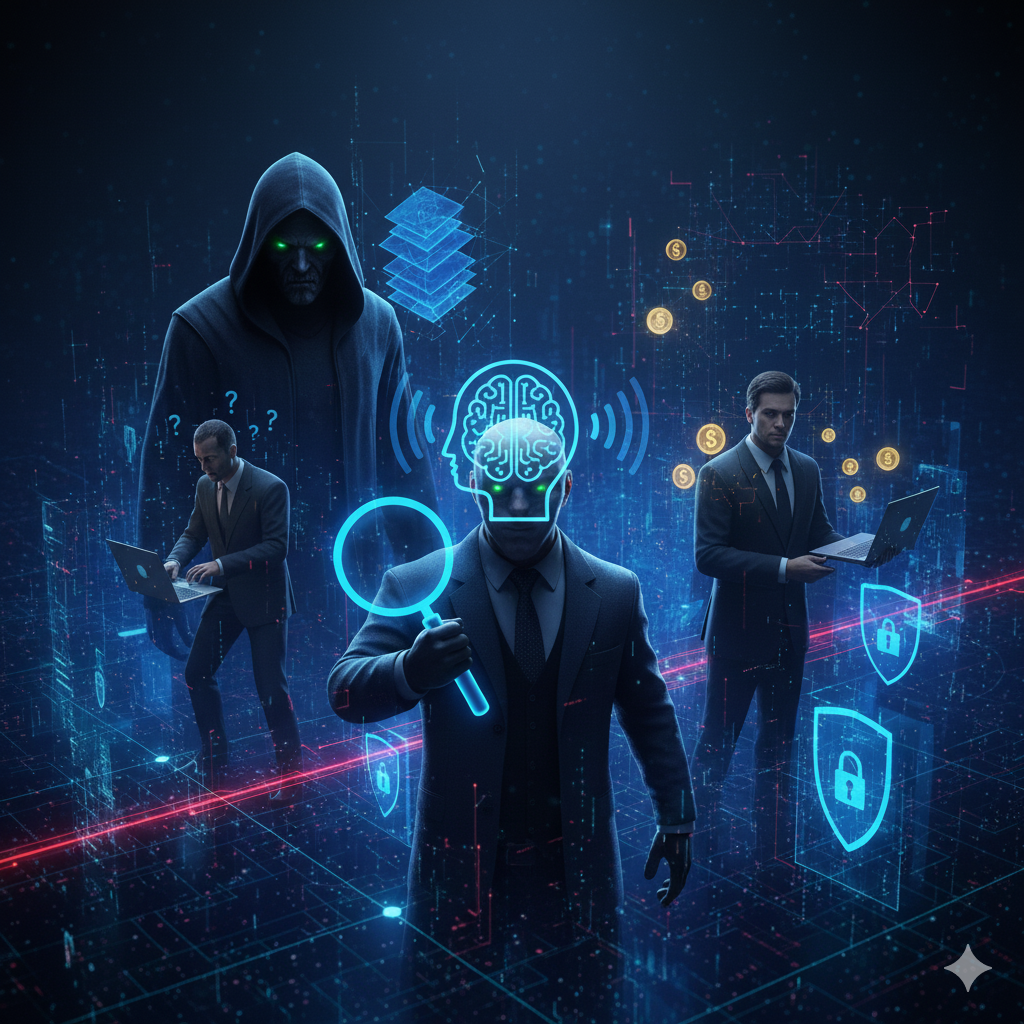
In cybersecurity, understanding who the attackers are, why they act, and how they operate is as critical as defending the systems themselves. While technology evolves rapidly, human motivation remains the constant driver behind every cyber incident. Attackers vary in sophistication, resources, and intent, but all exploit weaknesses in people, processes, and technology to achieve their objectives.
Modern attackers are rarely mysterious figures in hoodies. Many are organized professionals, operating within structured groups, guided by financial, political, ideological, or military goals. Their spectrum ranges from lone hackers to nation-state cyber units, and understanding it is vital for building effective defenses.
1. Individual Attackers: The Lone Wolves
The earliest cyberattacks were carried out by individuals motivated by curiosity, challenge, or recognition. Many were not malicious, seeing hacking as a technical sport. However, even small experiments could cause widespread disruption in interconnected systems.
- Historical examples:
- Robert Tappan Morris Jr. released the Morris Worm (1988), unintentionally crippling large portions of the early Internet.
- Kevin Mitnick exploited corporate and government systems, primarily to demonstrate his social engineering skills.
Modern lone wolves may include disgruntled employees, revenge-driven insiders, or ideologically motivated individuals. With the democratization of hacking tools, even “script kiddies” can launch attacks using publicly available exploit kits, targeting low-hanging fruit yet still posing persistent risks.
2. Organized Groups: Collaboration and Global Networks
As cyberattacks became profitable, individuals began forming specialized groups with roles such as developers, intruders, social engineers, and negotiators. These groups function like businesses but base their model on exploitation.
- Notable examples:
- The 2007 cyberattacks on Estonia, which disrupted banks and government services.
- The Carbanak Group (2013–2018), which stole over $1 billion from financial institutions through sophisticated phishing and lateral movement.
These groups often operate across borders, reinvesting profits to refine tools and evade detection, illustrating how cybercrime has evolved from amateur activity to corporate-grade operations.
3. Organized Crime and Cyber Monetization
Traditional criminal syndicates have embraced cyber operations for low-risk, high-reward outcomes. Modern cybercrime now resembles multinational corporations: hierarchies, divisions of labor, and even “customer service” for ransomware negotiations.
- Examples:
- Albert Gonzalez, who stole over 40 million credit card numbers from major U.S. retailers.
- Ransomware groups like Conti, LockBit, and REvil, now operating as Ransomware-as-a-Service (RaaS).
The ransomware economy has expanded the reach of organized cybercrime, blurring the line between small-time criminals and sophisticated syndicates.
4. Nation-State and State-Sponsored Attackers
At the most sophisticated level are nation-state actors, using cyber operations as instruments of geopolitical power. Their campaigns are persistent, well-resourced, and often indistinguishable from normal network activity.
- Targets: Critical infrastructure, defense contractors, government institutions, and strategic private enterprises.
- Historical examples:
- Stuxnet (Iran nuclear program) – disrupted centrifuges, blending cyber and physical impact.
- SolarWinds Supply Chain Attack (2020) – compromised thousands of organizations via trusted software updates.
These operations illustrate hybrid warfare, where cyber tools complement military, economic, and diplomatic objectives. Even private companies can become collateral targets in geopolitical conflicts.
5. Terrorist Organizations and Ideological Hackers
Terrorist groups and extremist movements leverage cyberspace to amplify impact, often lacking technical sophistication but using digital tools for propaganda, recruitment, financing, and coordination.
- Examples:
- The 2008 Mumbai attacks, coordinated using GPS and mapping tools.
- al-Qaeda’s digital infrastructure discovered in 2010, documenting operational planning and recruitment.
Cyberterrorism has evolved to include attempts to disrupt government systems or critical services, posing national security concerns.
6. Insider Threats and Corporate Espionage
Some of the most damaging attacks come from trusted insiders: employees, contractors, or partners with legitimate access. Motives range from revenge and ideology to financial gain or coercion.
- Notable cases:
- Edward Snowden leaked vast amounts of classified NSA data.
- Corporate intellectual property theft costing billions annually.
Insider threats bypass perimeter defenses, requiring behavioral monitoring, access control, and strong data governance to detect and prevent.
7. Hacktivists and Digital Protest Movements
Hacktivists use hacking as digital civil disobedience, often targeting institutions perceived as corrupt or unjust.
- Groups: Anonymous, LulzSec – high-profile attacks on governments, corporations, and media outlets.
- Impact: Symbolic disruptions (website defacement, data leaks) can severely damage reputation and public trust.
- Hacktivism increasingly overlaps with political cyber operations and nation-state propaganda, blurring lines between activism and psychological operations.
The Modern Attacker: Complex, Coordinated, and Goal-Driven
From lone curiosity-driven hackers to nation-state espionage units, attackers have become more sophisticated, coordinated, and purposeful. Motives, curiosity, ideology, profit, power, revenge, remain, but the means have evolved dramatically.
Modern adversaries are not defined by appearance or background. They could be students, corporate insiders, intelligence officers, or transnational criminal actors. The critical factors are access, opportunity, and motivation.
Effective defense requires moving beyond stereotypes. Organizations must integrate threat intelligence, behavioral analysis, insider awareness, and geopolitical context into their cybersecurity strategies.
As digital infrastructure underpins every sector, from finance to healthcare to national defense, understanding attackers is not just academic. It is a strategic imperative for resilience and national security.