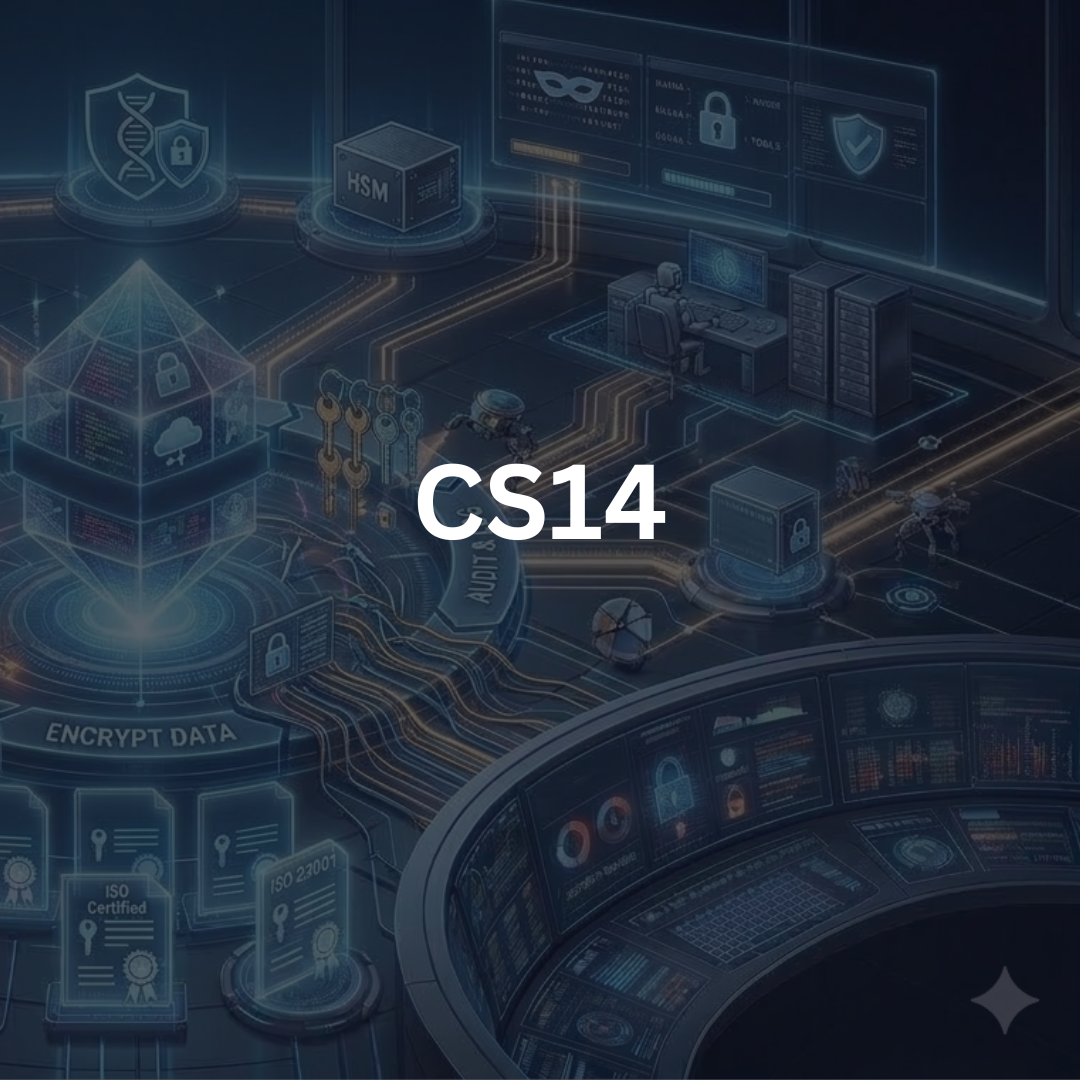
Secure storage systems form the backbone of nearly every digital service, yet they are frequently misunderstood as a purely infrastructural concern. In reality, storage security is a convergence point where cryptography, access control, system architecture, software engineering, and human behavior intersect. Data breaches consistently demonstrate that attackers rarely need to break cryptography; instead, they exploit misconfigured storage, excessive access privileges, or insecure application logic layered on top of storage systems.
From a cybersecurity governance perspective, storage is not merely where data “rests,” but where trust is either preserved or lost. Whether dealing with databases, object storage, file systems, backups, or cloud-native storage services, the security posture of storage systems directly determines an organization’s resilience to compromise.
Understanding Storage as an Attack Surface
Secure storage begins with recognizing that storage systems are active attack surfaces, not passive repositories. Attackers target storage because it aggregates valuable information and often exposes systemic weaknesses.
Common attack vectors against storage systems include:
-
Unauthorized direct access due to weak authentication or misconfiguration
-
Application-layer vulnerabilities that expose storage indirectly
-
Privilege escalation within storage management interfaces
-
Insecure backups and replicas
-
Metadata leakage revealing sensitive context
As emphasized in The Tangled Web, many storage breaches occur not through sophisticated exploitation but through unexpected interactions between application logic and storage behavior.
Types of Storage Systems and Their Security Implications
Secure storage design must account for the specific characteristics of different storage models. Each introduces distinct risks and control requirements.
Primary categories include:
-
Relational and NoSQL databases
-
File systems and network-attached storage
-
Object storage platforms
-
Distributed and cloud-native storage
-
Backup and archival systems
Security controls must align with how data is accessed, replicated, and managed across these systems rather than applying a one-size-fits-all approach.
Access Control and Identity Enforcement
Access control is the most critical—and most frequently misconfigured—component of storage security. Secure storage systems enforce who can access data, under what conditions, and for what purpose.
Strong access control principles include:
-
Least privilege at every layer
-
Role-based and attribute-based access models
-
Separation between data access and storage administration
-
Strong authentication for both humans and services
NIST SP 800-218 reinforces the idea that access control must be integrated into software design, not bolted on afterward. When applications rely on overly privileged storage credentials, a single compromise can cascade into systemic failure.
Access Control and Identity Enforcement
Access control is the most critical—and most frequently misconfigured—component of storage security. Secure storage systems enforce who can access data, under what conditions, and for what purpose.
Strong access control principles include:
-
Least privilege at every layer
-
Role-based and attribute-based access models
-
Separation between data access and storage administration
-
Strong authentication for both humans and services
NIST SP 800-218 reinforces the idea that access control must be integrated into software design, not bolted on afterward. When applications rely on overly privileged storage credentials, a single compromise can cascade into systemic failure.
Key Management and Storage Trust Boundaries
The security of encrypted storage depends almost entirely on how keys are handled. Poor key management negates even the strongest cryptography.
Critical best practices include:
-
Using centralized key management services or HSMs
-
Restricting key access to minimal required services
-
Logging and auditing key usage
-
Preventing hard-coded or environment-exposed keys
From a privacy engineering standpoint, keys represent the true trust boundary of storage systems, not the encryption algorithms themselves.
Secure Storage in Cloud and Distributed Environments
Cloud-native storage introduces new abstractions and risks. While cloud providers offer strong baseline security, misconfiguration remains the dominant threat.
Common cloud storage risks include:
-
Publicly accessible buckets or containers
-
Overly permissive IAM roles
-
Insecure cross-account access
-
Lack of monitoring on data access patterns
As The DevOps Handbook emphasizes, secure storage in the cloud requires automation, policy enforcement, and continuous validation, not manual configuration.
Secure Backups, Replication, and Data Lifecycle
Backups are often the weakest link in storage security. Organizations may secure production storage while neglecting replicas and archives that contain equally sensitive data.
A secure storage lifecycle includes:
-
Encrypted backups and snapshots
-
Secure storage of backup credentials
-
Controlled access to restore operations
-
Defined retention and destruction policies
Failure to secure backups has resulted in some of the most damaging data leaks, particularly when attackers target long-forgotten archival systems.
Logging, Monitoring, and Anomaly Detection
Secure storage systems must be observable. Without visibility, breaches may go undetected for months.
Effective monitoring includes:
-
Access logs tied to identity and purpose
-
Alerts on unusual data access patterns
-
Monitoring for privilege changes
-
Integrity validation of stored data
Practical Packet Analysis demonstrates how storage-related breaches are often discovered indirectly through anomalous network or application behavior, underscoring the importance of integrated telemetry.
Secure Storage in the Secure SDLC (NIST SP 800-218)
Secure storage is not an infrastructure-only concern; it must be addressed throughout the software development lifecycle.
Key SDLC integration points include:
-
Secure data modeling during design
-
Storage access controls enforced in code
-
Secure handling of secrets and credentials
-
Testing for storage misconfigurations and data leakage
NIST SP 800-218 positions secure storage as a shared responsibility between developers, security engineers, and operations teams.
Common Failures and Anti-Patterns
Despite mature guidance, storage security failures remain common. Understanding typical mistakes helps prevent repetition.
Common anti-patterns include:
-
Using production data in test environments
-
Storing credentials alongside data
-
Granting broad storage access for convenience
-
Failing to secure metadata and logs
-
Assuming cloud defaults are secure
These failures reinforce the lesson that secure storage is as much about discipline and governance as it is about technology.
Ethical and Privacy Considerations
Secure storage systems reflect organizational values regarding data stewardship. Poor storage security enables not only breaches but misuse, over-retention, and surveillance beyond user expectations.
Privacy engineering emphasizes:
-
Storing only necessary data
-
Limiting retention periods
-
Minimizing internal access
-
Designing for secure deletion
Secure storage, therefore, is inseparable from ethical responsibility in digital systems.
Storage Security as a Systemic Discipline
Secure storage systems are not defined by a single control or technology, but by consistent, well-integrated design decisions across architecture, software, and operations. When storage is treated as a first-class security concern, organizations reduce breach impact, improve compliance posture, and build systems worthy of trust.
For students and practitioners, mastery of secure storage means understanding:
-
Storage as an active attack surface
-
The limits of encryption alone
-
The importance of identity and access governance
-
The role of automation and monitoring
In modern cybersecurity, data is only as secure as the systems that store it—and the assumptions behind those systems.