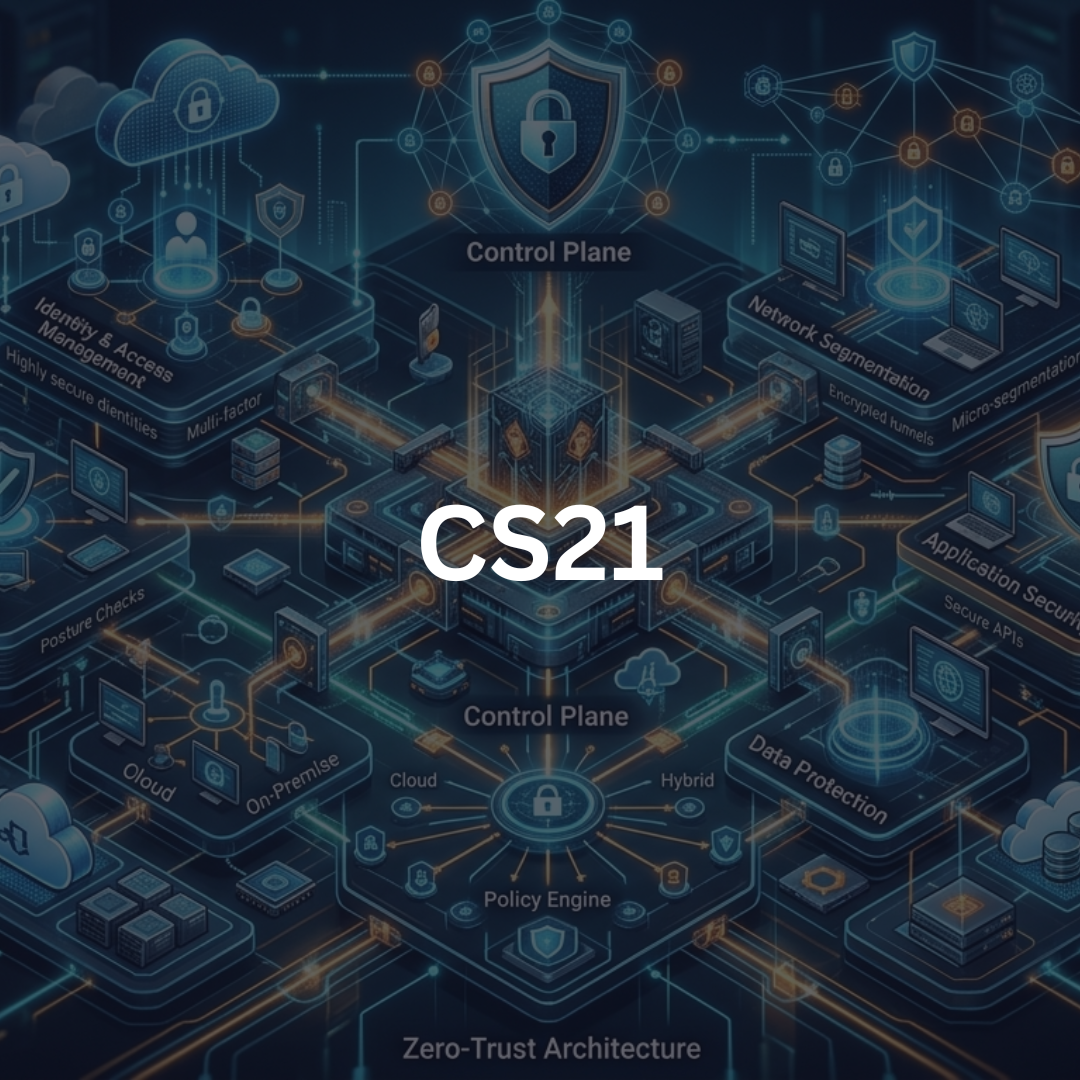
Modern enterprise environments are no longer monolithic networks with clear trust boundaries. They are complex, distributed ecosystems composed of cloud workloads, virtual machines, containers, SaaS platforms, remote users, third-party integrations, and legacy systems. In such environments, traditional network segmentation methods—such as VLANs, firewalls, and perimeter-based controls—are insufficient to prevent modern cyberattacks.
Micro-segmentation emerged as a response to a critical failure of traditional security models: the assumption that internal traffic is inherently trustworthy. Once an attacker breaches a single system, lateral movement often becomes trivial, allowing the compromise to spread rapidly across the environment. Micro-segmentation directly addresses this problem by enforcing fine-grained, identity-aware, and policy-driven isolation between workloads, applications, and services.
Within the context of Zero Trust Network Architecture (ZTNA), micro-segmentation is not optional—it is foundational. It operationalizes the principle of least privilege at the network and workload level, transforming flat networks into controlled, compartmentalized environments.
Conceptual Foundations of Micro-Segmentation
Micro-segmentation is the practice of dividing an enterprise environment into small, logically isolated security zones, each governed by explicit access policies. Unlike traditional segmentation, which focuses on network topology, micro-segmentation focuses on workloads, identities, and application relationships.
According to NIST SP 800-207, Zero Trust architectures require mechanisms to limit lateral movement and enforce least privilege. Micro-segmentation fulfills this requirement by ensuring that every communication path is explicitly authorized, monitored, and continuously evaluated.
At its core, micro-segmentation is about controlling east-west traffic, which refers to internal communications between systems. Historically, security controls focused on north-south traffic (external to internal), leaving east-west traffic largely unmonitored and unrestricted.
Traditional Segmentation vs Micro-Segmentation
To fully understand the value of micro-segmentation, it is important to contrast it with traditional segmentation approaches.
Traditional segmentation:
-
Operates at the network layer
-
Relies on IP addresses, subnets, and VLANs
-
Enforces coarse-grained access controls
-
Requires significant network reconfiguration
-
Scales poorly in dynamic environments
Micro-segmentation:
-
Operates at the workload and application layer
-
Uses identity, context, and policy rather than IPs
-
Enforces fine-grained, least-privilege access
-
Adapts dynamically to changes
-
Is cloud- and virtualization-friendly
This shift aligns closely with the Cloud Security Handbook (O’Reilly), which emphasizes software-defined controls over hardware-centric network design.
Micro-Segmentation in the Context of Zero Trust
Micro-segmentation is one of the most tangible technical implementations of Zero Trust principles. It ensures that no implicit trust exists between workloads, even if they reside within the same data center or cloud environment.
In a Zero Trust model:
-
Every workload is treated as potentially compromised
-
Access is granted only when explicitly allowed
-
Policies are continuously enforced and validated
Micro-segmentation enforces these principles by:
-
Eliminating default trust between systems
-
Reducing the blast radius of breaches
-
Enabling precise control over application dependencies
Rather than trusting network location, micro-segmentation relies on policy-based trust decisions, consistent with identity-centric architectures.
Architectural Components of Micro-Segmentation
A mature micro-segmentation architecture consists of several interconnected components that work together to enforce security policies.
- Policy Definition Layer
This layer defines who can communicate with whom, under what conditions, and for what purpose. Policies are typically expressed in human-readable terms aligned with business logic, such as “Application A may communicate with Database B over port X.”
In frameworks such as SABSA, this layer is directly traceable to business requirements and risk assessments.
- Enforcement Layer
The enforcement layer applies policies at runtime. Enforcement can occur at various points:
-
Hypervisor level
-
Host-based agents
-
Container orchestration platforms
-
Cloud-native security controls
Unlike traditional firewalls, enforcement points in micro-segmentation are distributed, reducing reliance on centralized choke points.
- Visibility and Telemetry Layer
Micro-segmentation requires deep visibility into application behavior and traffic flows. This layer provides:
-
Real-time monitoring of east-west traffic
-
Detection of policy violations
-
Behavioral baselining of workloads
This visibility supports continuous verification, a key Zero Trust requirement.
Identity and Context in Micro-Segmentation
One of the defining characteristics of modern micro-segmentation is its reliance on identity rather than network constructs.
Identities may include:
-
Workload identities
-
Service accounts
-
Application roles
-
Cloud-native identities
Contextual signals enhance policy decisions, including:
-
Environment (production vs development)
-
Device posture
-
Time of access
-
Threat intelligence inputs
This approach aligns with ISO/IEC 27001:2022, which emphasizes contextual access control and risk-based decision-making.
Micro-Segmentation in Cloud and Hybrid Environments
Cloud and hybrid environments are inherently dynamic. Workloads are created, destroyed, and scaled automatically. Micro-segmentation thrives in this context because it is software-defined and adaptive.
In cloud environments, micro-segmentation:
-
Protects workloads regardless of IP changes
-
Integrates with cloud-native identity services
-
Enables consistent policies across environments
The Cloud Security Handbook highlights micro-segmentation as a key control for preventing cloud-native lateral movement attacks.
Governance, Risk, and Compliance Alignment
Micro-segmentation is not only a technical control; it is a governance enabler.
From a COBIT 2019 perspective, micro-segmentation supports:
-
Risk optimization
-
Controlled access to enterprise assets
-
Continuous monitoring and improvement
From an ISO/IEC 27001:2022 standpoint, it strengthens:
-
Access control (Annex A)
-
Network security management
-
Segregation of duties
By enforcing explicit communication paths, micro-segmentation simplifies audits and enhances accountability.
Operational Benefits and Security Outcomes
When implemented correctly, micro-segmentation delivers measurable security benefits.
Key outcomes include:
-
Reduced lateral movement opportunities
-
Faster breach containment
-
Improved incident response effectiveness
-
Enhanced visibility into internal traffic
These outcomes directly support Zero Trust maturity models and enterprise resilience objectives.
Challenges and Common Pitfalls
Despite its benefits, micro-segmentation adoption presents challenges.
Common pitfalls include:
-
Overly complex policies
-
Insufficient application dependency mapping
-
Cultural resistance from operations teams
-
Poor integration with identity systems
Successful implementations emphasize incremental deployment, strong governance, and cross-team collaboration.
Micro-Segmentation Through a SABSA Lens
Within the SABSA framework, micro-segmentation maps cleanly across architectural layers:
-
Business layer: risk and trust requirements
-
Logical layer: access policies and segmentation rules
-
Physical layer: enforcement mechanisms
-
Operational layer: monitoring and response
This alignment ensures that segmentation decisions are not arbitrary but are driven by business risk and security objectives.
Educational Perspective: Why Micro-Segmentation Matters for Students
For students entering cybersecurity, micro-segmentation teaches critical architectural thinking:
-
Understanding lateral movement threats
-
Designing least-privilege systems
-
Balancing security with operational complexity
-
Integrating governance and technology
These skills are essential for modern roles such as:
-
Security architect
-
Cloud security engineer
-
Zero Trust engineer
-
Enterprise risk analyst
Micro-Segmentation as a Cornerstone of Modern Security Architecture
Micro-segmentation represents a fundamental shift in how enterprises think about internal security. By eliminating implicit trust, enforcing least privilege, and tightly controlling east-west traffic, it transforms networks from flat and permissive environments into resilient, compartmentalized systems.
When implemented within structured frameworks such as SABSA, governed by COBIT 2019, and aligned with ISO/IEC 27001:2022, micro-segmentation becomes a strategic capability rather than a tactical control. It is a cornerstone of Zero Trust architecture and an essential building block for secure, scalable, and future-ready enterprises.