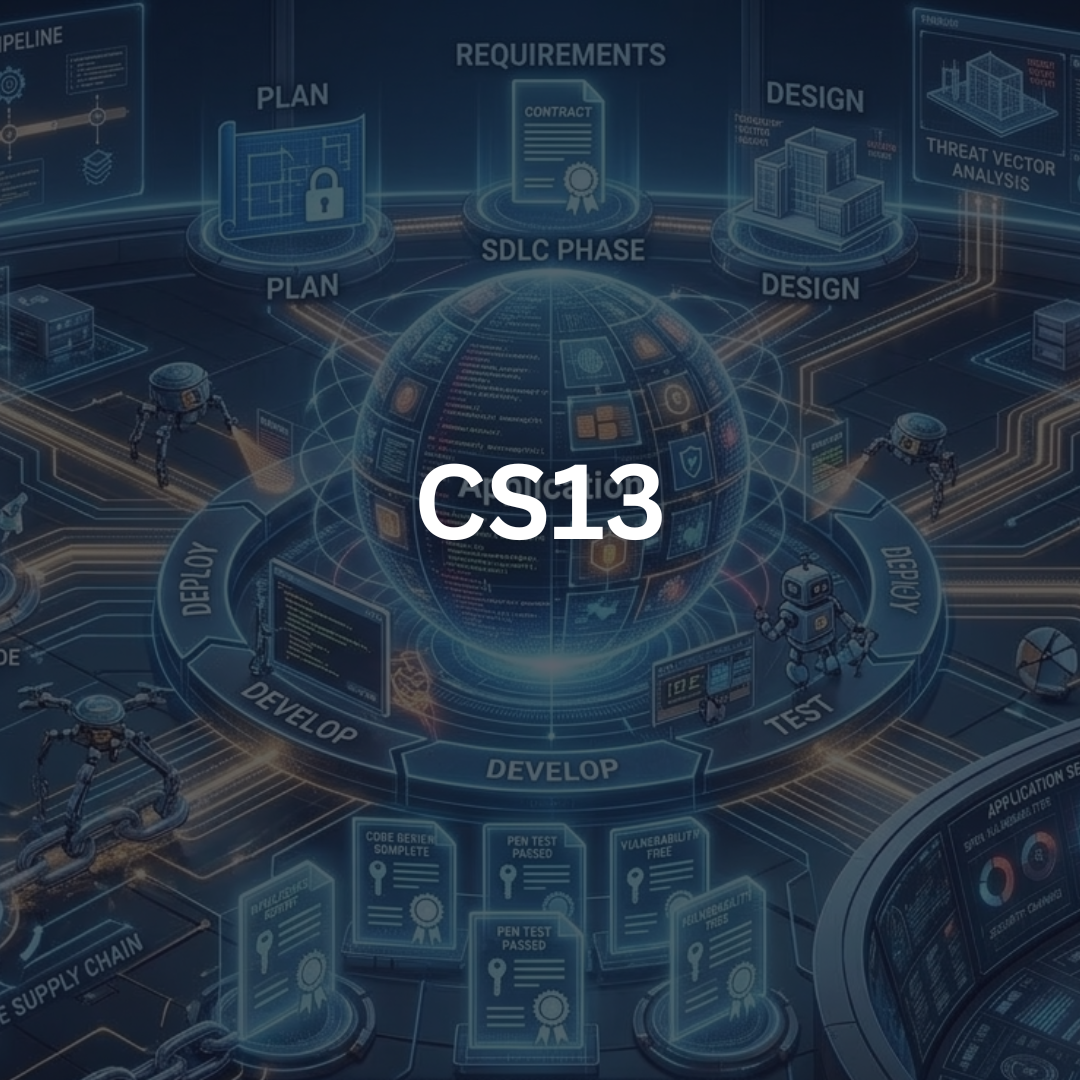
The evolution from traditional software development lifecycles to DevOps fundamentally reshaped how software is built, deployed, and maintained. However, this acceleration also exposed a critical weakness: security was often left behind. DevSecOps emerged not as a toolset or a single methodology, but as a cultural and engineering response to the realization that security must move at the same speed as development and operations.
DevSecOps integrates security controls, risk awareness, and threat-informed decision-making directly into the Software Development Life Cycle (SDLC). Rather than treating security as a final gate or post-deployment activity, DevSecOps embeds it continuously—from planning and design to deployment and runtime monitoring. NIST SP 800-218 (Secure Software Development Framework) formalizes this approach by defining security as a shared responsibility across roles, processes, and technologies.
At its core, DevSecOps acknowledges a simple truth: software will be attacked, and the only sustainable defense is to design, build, and operate it with that assumption in mind.
Limitations of Traditional SDLC Security Models
Traditional SDLC security models relied heavily on perimeter defenses and late-stage testing. Security assessments were often conducted after development milestones, typically through penetration testing shortly before release. While valuable, this approach created several systemic weaknesses.
Security defects discovered late in the lifecycle are:
-
Significantly more expensive to fix
-
More likely to be deferred or accepted as risk
-
Often deeply embedded in architecture or logic
As described in The DevOps Handbook, late-stage security creates organizational friction, where security teams are perceived as blockers rather than enablers. This dynamic not only slows delivery but encourages insecure workarounds.
DevSecOps was born to address these structural inefficiencies by aligning security objectives with development velocity rather than opposing it.
Defining DevSecOps: Principles and Objectives
DevSecOps is best understood as an extension of DevOps that explicitly incorporates security engineering. It is not about adding more security tools, but about redefining how security decisions are made and enforced throughout the SDLC.
Core principles of DevSecOps include:
-
Shift-left security, where risks are addressed as early as possible
-
Automation-first security, reducing reliance on manual controls
-
Shared responsibility, dissolving silos between developers, security, and operations
-
Continuous feedback, using metrics and telemetry to improve defenses
OWASP emphasizes that DevSecOps is successful only when developers understand security implications and security teams understand development constraints. This mutual literacy is a defining characteristic of mature DevSecOps environments.
Security Integration Across SDLC Phases
- Planning and Requirements
DevSecOps begins before a single line of code is written. Security requirements must be defined alongside functional requirements, informed by business risk, regulatory obligations, and threat models.
This phase includes:
-
Identifying sensitive data and trust boundaries
-
Defining security acceptance criteria
-
Mapping compliance requirements such as data protection or access control
NIST SP 800-218 highlights the importance of documenting security requirements early to prevent ambiguity and misalignment later in development.
- Secure Design and Architecture
Architecture decisions have long-term security consequences. Choices around authentication models, service decomposition, data flows, and third-party integrations define the system’s attack surface.
DevSecOps promotes threat modeling as a design activity, not a post-design review. Drawing from The Tangled Web, many catastrophic vulnerabilities originate from flawed assumptions about user behavior, data integrity, or system isolation.
Effective secure design in DevSecOps environments includes:
-
Explicit trust boundary definition
-
Least-privilege service interactions
-
Secure defaults and fail-safe mechanisms
This phase is where security engineering provides the highest return on investment.
- Secure Coding and Developer Enablement
Secure coding practices, as outlined by OWASP and the SANS Top 25, must be reinforced through tooling, education, and feedback loops. In DevSecOps, developers are not merely consumers of security guidance—they are primary security actors.
Key practices include:
-
Secure coding standards aligned with OWASP guidance
-
Static Application Security Testing (SAST) integrated into IDEs and pipelines
-
Dependency scanning for known vulnerabilities
Gray Hat Hacking demonstrates that attackers often exploit predictable coding errors, making developer education one of the most effective defensive strategies.
- Continuous Testing and Validation
DevSecOps replaces periodic security testing with continuous validation. Automated testing becomes the backbone of security assurance, ensuring that vulnerabilities are detected as code evolves.
Common testing approaches include:
-
Dynamic Application Security Testing (DAST)
-
Interactive Application Security Testing (IAST)
-
Infrastructure-as-Code (IaC) security scanning
The goal is not to eliminate manual testing, but to ensure that human expertise is focused on complex logic and systemic risks rather than repeatable issues.
- Secure Deployment and Operations
Deployment pipelines are high-value attack targets. Misconfigured CI/CD systems have been exploited in numerous supply-chain attacks, emphasizing the need for hardened pipelines.
Secure deployment practices include:
-
Strong access control for build systems
-
Secrets management and key rotation
-
Artifact integrity verification
Operational security also extends to runtime monitoring, logging, and incident response. DevSecOps environments rely heavily on observability to detect abnormal behavior quickly.
DevSecOps Toolchains and Automation
While DevSecOps is not tool-driven, tooling enables scalability. Mature organizations integrate security tools seamlessly into development workflows to minimize friction.
Typical DevSecOps tool categories include:
-
Code analysis and vulnerability scanners
-
Dependency and supply-chain security tools
-
Cloud and container security platforms
Automation ensures consistency, but tooling must be carefully tuned to avoid alert fatigue. Poorly implemented automation can undermine developer trust and reduce effectiveness.
Cultural Transformation and Organizational Change
One of the most challenging aspects of DevSecOps is cultural rather than technical. Security teams must shift from gatekeepers to enablers, while developers must accept security as part of their professional responsibility.
Successful DevSecOps cultures share several traits:
-
Psychological safety for reporting security issues
-
Blameless postmortems focused on learning
-
Leadership support for secure delivery goals
The DevOps Handbook emphasizes that culture is the foundation upon which processes and tools operate. Without cultural alignment, DevSecOps initiatives often fail despite technical investment.
DevSecOps and Compliance Alignment
Contrary to common belief, DevSecOps strengthens compliance rather than undermines it. Frameworks such as NIST SP 800-218, ISO 27001, and sector-specific regulations can be mapped directly into DevSecOps controls.
Continuous evidence generation through automated pipelines simplifies audits and improves transparency. Compliance becomes an outcome of secure engineering rather than a separate activity.
DevSecOps as the Future of Secure Software
DevSecOps represents the maturation of secure software development in an era of continuous delivery and persistent threats. It recognizes that security cannot be bolted on, outsourced, or deferred—it must be engineered into the fabric of software systems.
For students and early-career professionals, understanding DevSecOps is essential not only for technical competence but for career relevance. Modern cybersecurity professionals must operate across development, operations, and security domains, translating risk into engineering decisions.
Ultimately, DevSecOps is not about perfection. It is about continuous risk reduction, informed by real-world threats, automated controls, and collaborative culture. In an environment where software defines organizational capability, DevSecOps defines organizational resilience.