Secure coding represents one of the most critical and cost-effective cybersecurity practices, yet it remains one of the most misunderstood. While security tools, network defenses, and monitoring systems play important roles, insecure code continues to be the root cause of the majority of modern breaches. Secure coding is not merely about avoiding syntax errors or complying with checklists; it is about engineering software that behaves safely even when used in unexpected or malicious ways.
From a Secure Software Development Lifecycle (SSDLC) perspective, secure coding serves as the bridge between design intent and operational reality. The OWASP Top 10 and SANS Top 25 Most Dangerous Software Errors exist not as theoretical lists, but as empirical evidence derived from decades of real-world exploitation. This chapter explores secure coding principles through these frameworks, grounding defensive practices in attacker techniques and system-level consequences.
Secure Coding Within the Secure SDLC
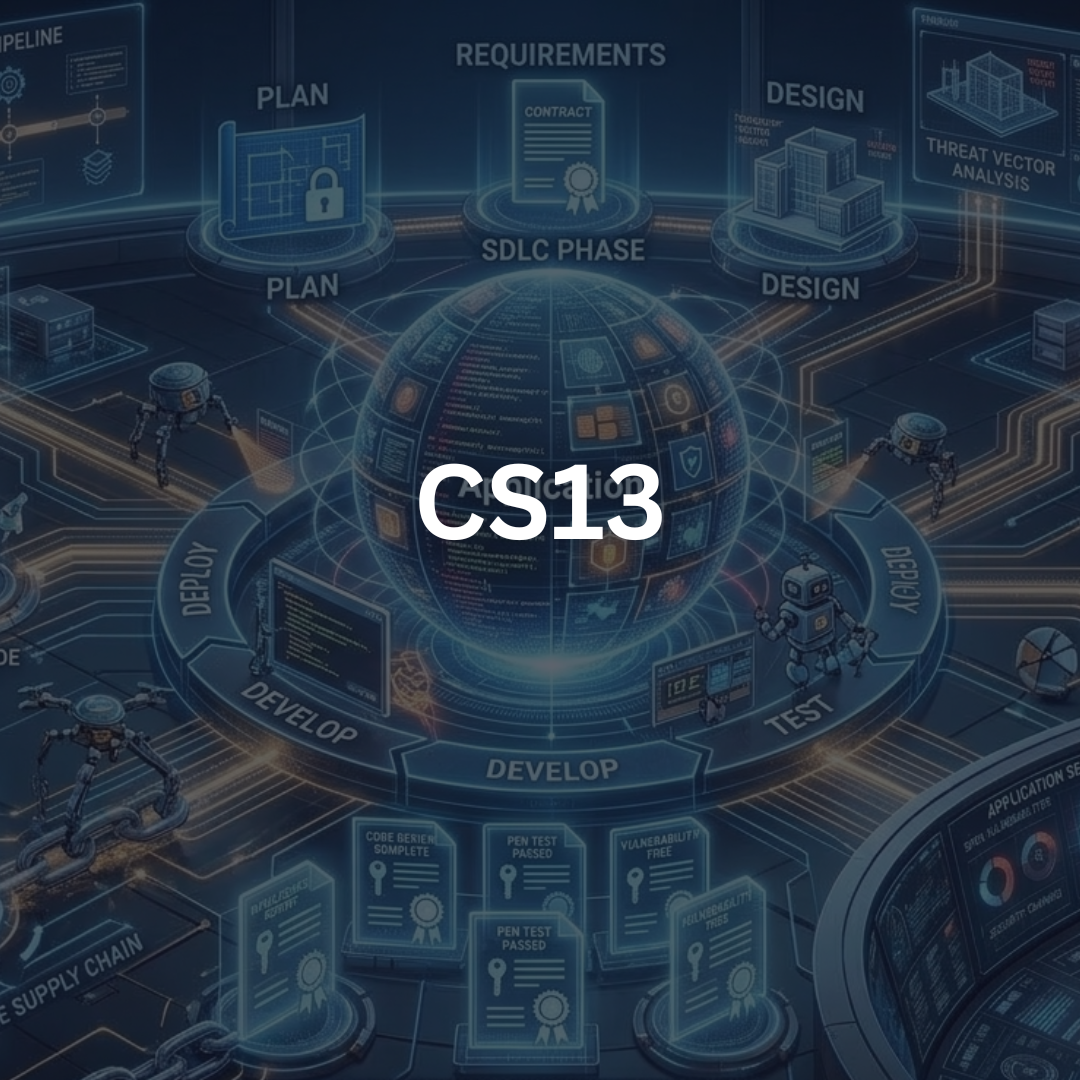
Secure coding cannot be isolated from the broader development lifecycle. According to NIST SP 800-218, secure software development requires that security be embedded across planning, design, implementation, testing, deployment, and maintenance. Secure coding occupies the implementation phase but is heavily influenced by architectural decisions made earlier.
When developers write code without threat models or security requirements, they inadvertently embed assumptions that attackers exploit. As Michal Zalewski explains in The Tangled Web, many vulnerabilities emerge not from malicious intent or incompetence, but from overly optimistic trust in inputs, users, or environments.
Secure coding therefore aims to:
-
Enforce trust boundaries explicitly
-
Fail safely rather than catastrophically
-
Assume malicious input by default
-
Minimize unintended behavior
These principles align closely with both OWASP guidance and the SANS Top 25 error categories.
OWASP and SANS: Complementary Secure Coding Frameworks
While often referenced together, OWASP and the SANS Top 25 serve different but complementary purposes. OWASP focuses on application-layer risks, particularly web and API-driven systems. The SANS Top 25, by contrast, categorizes fundamental programming errors that span languages, platforms, and environments.
OWASP highlights what attackers exploit, while SANS emphasizes how developers accidentally enable exploitation. Together, they form a comprehensive lens for secure coding education.
Input Validation and Trust Boundaries
Improper input validation remains one of the most persistent and dangerous secure coding failures. Attackers exploit applications by injecting unexpected input across trust boundaries, whether through user interfaces, APIs, files, or inter-process communication.
Common failures include:
-
SQL injection due to concatenated queries
-
Command injection via unsanitized system calls
-
Cross-site scripting from unescaped output
-
Path traversal through unchecked file inputs
Secure coding requires recognizing that all input is untrusted, regardless of source. This includes data from internal systems, APIs, cookies, and even configuration files. OWASP strongly emphasizes allow-listing, canonicalization, and context-aware encoding as primary defenses.
From an attacker’s perspective, as illustrated in Gray Hat Hacking, input validation flaws provide reliable footholds for initial access and lateral movement, making them high-priority remediation targets.
Authentication, Authorization, and Session Management
Authentication and authorization errors often stem from flawed assumptions rather than technical complexity. Developers frequently confuse identity verification with access control, resulting in logic flaws that bypass security entirely.
Secure coding failures in this area include:
-
Hardcoded credentials or secrets
-
Insecure password storage
-
Broken access control checks
-
Session fixation and token reuse
OWASP consistently ranks broken authentication and access control among the top risks because they enable attackers to act as legitimate users. Secure coding practices mandate strong cryptographic storage, consistent authorization checks, and defense-in-depth validation at every access point.
These controls are reinforced by NIST SP 800-218, which stresses identity management, credential handling, and least privilege throughout software systems.
Memory Safety and Resource Management
Many of the SANS Top 25 errors relate to memory and resource management, particularly in low-level languages such as C and C++. Buffer overflows, use-after-free conditions, and integer overflows have historically led to catastrophic vulnerabilities.
Even in memory-safe languages, resource mismanagement can result in:
-
Denial-of-service through uncontrolled resource consumption
-
Race conditions and concurrency bugs
-
Unsafe deserialization vulnerabilities
Secure coding requires explicit handling of memory boundaries, concurrency controls, and lifecycle management. While modern languages reduce certain risks, developers must still understand how attackers abuse edge cases, as documented extensively in Gray Hat Hacking.
Error Handling, Logging, and Information Disclosure
Improper error handling represents a subtle but powerful attack vector. Excessive error messages, stack traces, or debug output can leak sensitive information about system internals, database structures, or security controls.
Secure coding practices require:
-
Graceful failure without revealing internals
-
Structured logging for security monitoring
-
Separation between user-facing errors and internal diagnostics
From a DevOps perspective, logging must balance observability with confidentiality. The DevOps Handbook emphasizes that secure systems must be operable, maintainable, and auditable without exposing attack-enabling information.
Dependency Management and Supply Chain Security
Modern applications rely heavily on third-party libraries, frameworks, and services. Insecure coding now extends beyond custom code to include dependency selection, version management, and update practices.
Common risks include:
-
Using outdated or vulnerable libraries
-
Blind trust in package repositories
-
Lack of software bill of materials (SBOMs)
NIST SP 800-218 explicitly addresses supply chain risks, requiring developers to track dependencies and evaluate their security posture. Secure coding, in this context, becomes an organizational discipline rather than an individual developer task.
Secure Coding in DevOps and CI/CD Pipelines
Secure coding must scale across automated pipelines and rapid deployment cycles. Static analysis, dependency scanning, and security testing tools are essential, but they do not replace developer understanding.
Effective secure coding in DevOps environments involves:
-
Shifting security checks left into development
-
Treating vulnerabilities as defects, not exceptions
-
Integrating security feedback into developer workflows
The most successful organizations embed secure coding knowledge into engineering culture rather than relying solely on security teams.
Secure Coding as an Engineering Mindset
Secure coding is not a checklist, a framework, or a tool—it is an engineering mindset grounded in realism about how software is attacked and abused. OWASP and the SANS Top 25 provide invaluable guidance, but their effectiveness depends on how deeply developers internalize the underlying principles.
For students and aspiring professionals, secure coding represents the convergence of software engineering, threat modeling, and adversarial thinking. Mastery of secure coding principles enables developers to reduce attack surfaces, limit blast radius, and build systems that remain resilient even under hostile conditions.
In modern cybersecurity, the most effective defense often begins long before deployment—at the moment a developer writes the first line of code.